

If you’re a people-pleaser, you probably know it, but you may not know why – or, how to stop.
People-pleasing behaviour can stem from a variety of psychological factors, including a desire for approval, fear of rejection or conflict, low self-esteem, and a need to feel in control of situations or relationships. But it’s more complex than that.
The autonomic nervous system
The autonomic nervous system regulates involuntary bodily functions and is made up of two branches; the sympathetic nervous system and the parasympathetic nervous system.
The sympathetic nervous system is responsible for the body’s “fight or flight” response, activating in times of stress or danger – including trauma.
Without you even realising it, the body increases heart rate, dilates the pupils, and diverts blood flow to essential organs so you are ready to fight or run for your life.
This is an evolutionary survival mechanism, which worked great for escaping a sabre-toothed tiger, but in modern day life can lead to poor mental and physical health, particularly anxiety.
On the other hand, the parasympathetic nervous system is responsible for the body’s “rest and digest” response, promoting relaxation, digestion, and restoration after stress.
So where does people-pleasing fit in?
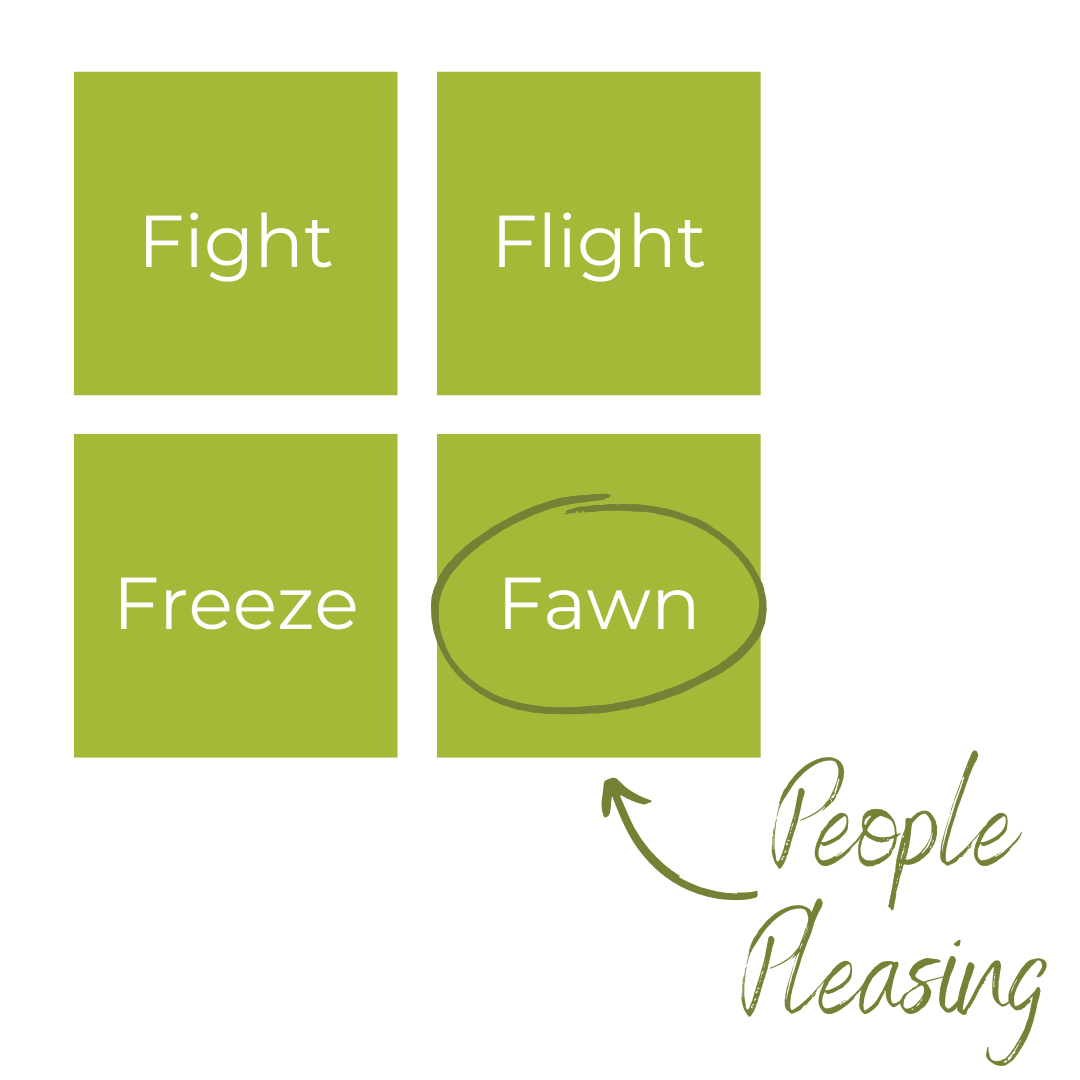
There are two more elements to the fight or flight response. Freeze and Fawn.
They are all physiological reactions to trauma, stress, or threats (whether perceived or real).
When faced with a stressful situation, the body releases hormones like adrenaline and cortisol, preparing it to confront the threat (fight) or flee from it (flight).
Fawning (aka people-pleasing) involves adapting yourself to others, often at the expense of your own needs and boundaries, in an attempt to avoid conflict or appease others.
This people-pleasing behaviour can be seen as a survival strategy in situations where fight or flight may not be feasible or effective. This is commonly seen in domestic abuse and toxic family environments.
People can also experience a temporary paralysis or immobilisation response when faced with overwhelming stress or danger, known as the freeze response. It’s often seen in situations where the individual perceives themselves as helpless or unable to escape the threat. In some cases, the freeze response can serve as a protective mechanism, allowing the individual to dissociate from the traumatic experience and potentially reduce the severity of psychological and physical harm.
Is people-pleasing bad for you?
In the context of trauma, the fight or flight response and related behaviours such as people-pleasing can become flawed coping mechanisms.
Those who have experienced significant stress or trauma may have a heightened sensitivity to perceived threats causing difficulties in regulating emotions, forming relationships, and coping with stress.
Prolonged or repeated activation of the sympathetic nervous system can contribute to a range of mental health issues, including anxiety, depression, and post-traumatic stress disorder (PTSD), with symptoms including flashbacks, intrusive memories, hypervigilance, and emotional numbing,
Furthermore, those who engage in people-pleasing often prioritise the needs and desires of others over their own, often to the detriment of their own happiness and wellbeing.
How to stop people-pleasing
Stopping people-pleasing behaviour can be challenging, but it’s definitely possible with self-awareness, practice, and the willingness to set boundaries and prioritise your own wellbeing.
Here are some practical tips to help break the cycle of people-pleasing:
- Recognise the pattern: Become aware of when you’re engaging in people-pleasing behaviour. Notice the situations, triggers, and emotions that lead you to prioritise others’ needs over your own.
- Understand your motivations: Reflect on why you feel the need to please others. Are you seeking approval, avoiding conflict, or trying to gain a sense of control? If you’re not sure why, try journalling. Understanding your underlying motivations can help you address them more effectively.
- Set boundaries: Learn to say “no” when necessary and establish clear boundaries with others. Remember that it’s okay to prioritise your own needs and wellbeing. Practice assertiveness and communicate your boundaries calmly and confidently.
- Practice self-care: Make self-care a priority in your life. Take time to rest, recharge, and engage in activities that bring you joy and fulfilment.
- Challenge negative beliefs: Examine any negative beliefs you may have about yourself or your worthiness. Replace them with more positive and empowering beliefs. Remember that you are worthy of respect and consideration, regardless of whether you please others.
- Seek support: Talk to trusted friends, family members, or a therapist about your struggles with people-pleasing. They can offer perspective, support, and guidance as you work to change your behaviour.
- Practice self-compassion: Be kind and compassionate toward yourself as you navigate the process of breaking free from people-pleasing. Change takes time and effort, so be patient with yourself and celebrate your progress along the way.
- Set realistic expectations: Accept that you can’t please everyone all the time. Embrace imperfection and focus on doing what’s best for you in each situation, rather than trying to meet unrealistic expectations.
By implementing these strategies and practicing self-awareness, self-care, and assertiveness, you can gradually reduce people-pleasing behaviour and cultivate healthier, more authentic relationships with others.
Stopping people-pleasing can be a long process and you may want some professional guidance to navigate through this.
Counselling and other therapeutic interventions focus on helping you process and integrate traumatic memories, regulate your nervous system responses, develop healthier coping strategies, and establish boundaries in relationships.
To book an appointment or find out more, get in touch today.